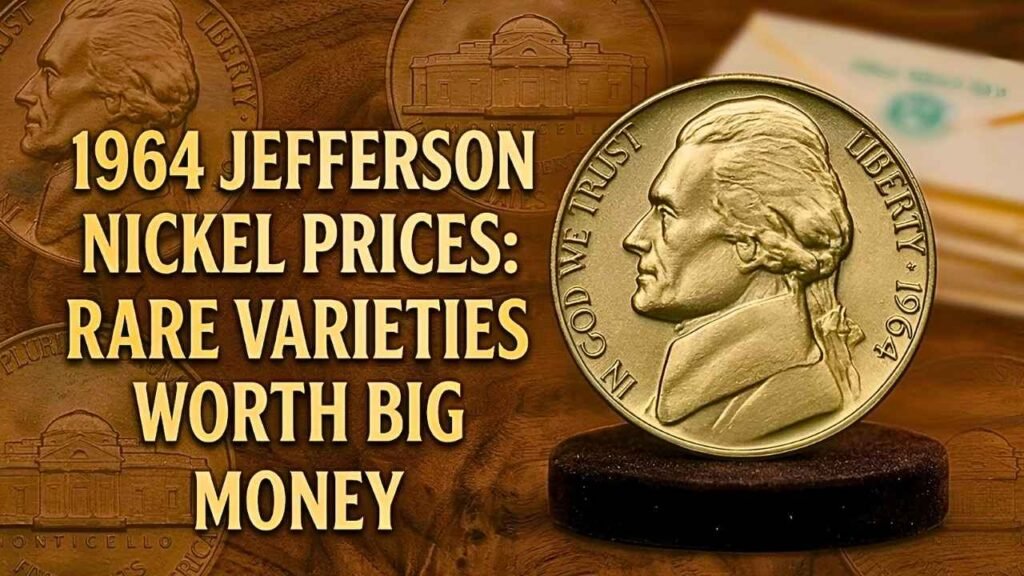
The Jefferson nickel has been a staple of American coinage since 1938, but few collectors expected the 1964 issue to become a hot topic in recent years. Once considered a common coin with little more than face value, certain varieties and conditions of the 1964 Jefferson nickel are now commanding impressive prices. This surge in interest has sparked curiosity among collectors and investors alike, making the 1964 nickel a coin worth revisiting.
Historical Background
The 1964 Jefferson nickel was minted during a period of high demand for coinage in the United States. Millions were produced at both the Philadelphia and Denver mints, making it one of the most abundant nickels in circulation. At first glance, this abundance suggested little chance of rarity or value. However, as collectors began to examine these coins more closely, they discovered that certain varieties and conditions stood out from the rest.
Why the 1964 Nickel Matters Today
The sudden rise in value is tied to several factors. First, the sheer age of the coin means that high-grade examples are increasingly scarce. Circulated nickels from 1964 are common, but uncirculated pieces with sharp details and original luster are much harder to find. Second, error coins and special varieties have been identified, adding to the excitement. Finally, renewed interest in mid-20th century coinage has driven demand, especially among younger collectors entering the hobby.
Rare Varieties and Errors
One of the most fascinating aspects of the 1964 Jefferson nickel is the presence of rare varieties. Collectors have identified doubled die obverses, repunched mint marks, and other striking errors that significantly increase value. These coins are rare and often discovered only through careful examination. For example, a 1964-D nickel with a strong doubled die can fetch hundreds of dollars, while a pristine proof strike may command even more.
Condition and Grading
Condition plays a crucial role in determining the value of a 1964 Jefferson nickel. Coins are graded on the Sheldon scale, ranging from Poor (P-1) to Mint State (MS-70). While circulated examples may only be worth a few cents, coins graded MS-65 or higher can be worth several dollars or more. Proof coins, struck with special dies for collectors, are especially prized when they retain their mirror-like finish.
Market Trends
The coin market is dynamic, and the 1964 Jefferson nickel has benefited from a surge in interest in collectible U.S. coinage. Online auctions, coin shows, and dealer inventories reveal growing demand for high-grade examples and rare varieties. Prices have risen steadily, and many collectors now view the 1964 nickel as a sleeper coin that could continue to appreciate in value.
Collecting Tips
For those interested in collecting 1964 Jefferson nickels, there are several strategies to consider. Start by examining coins in circulation or inherited collections, as valuable varieties may be hiding in plain sight. Investing in certified coins graded by reputable services ensures authenticity and condition. Finally, staying informed about market trends and error varieties can help collectors make smart purchases.
Key Highlights
- The 1964 Jefferson nickel was minted in huge numbers but rare varieties exist
- Doubled dies, repunched mint marks, and proof strikes add significant value
- Condition and grading are critical in determining worth
- High-grade examples and rare errors can fetch hundreds of dollars
- Renewed collector interest has driven prices upward in recent years
Final Words
The 1964 Jefferson nickel proves that even common coins can hold hidden treasures. While millions were minted, only a fraction possess the qualities that make them valuable today. Whether it is a rare error, a pristine proof, or a high-grade circulation strike, the 1964 nickel has earned its place in the spotlight. For collectors, it represents both a piece of American history and an opportunity to uncover unexpected value. As interest continues to grow, the 1964 Jefferson nickel may remain one of the most intriguing coins of its era.