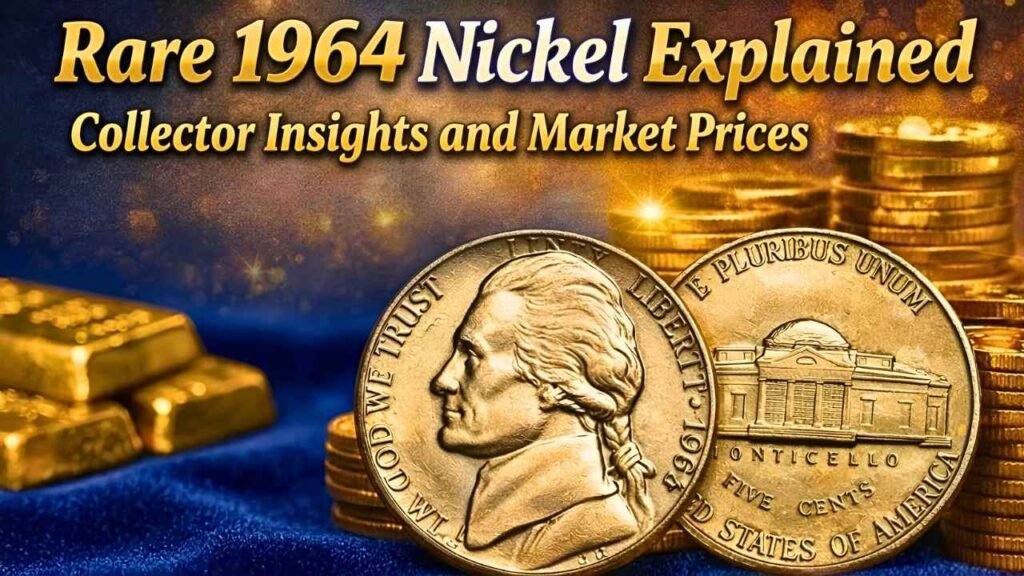
The 1964 Jefferson Nickel may look like an ordinary five‑cent coin, but for collectors it holds far more significance. Minted during a time of high demand, this coin has become a fascinating piece of numismatic history. While most examples are common, certain rare variations, errors, and pristine conditions make the 1964 Nickel worth far more than its face value. Understanding its background, rarity, and collector appeal is essential for anyone interested in coin collecting.
Historical Background
The Jefferson Nickel was first introduced in 1938, replacing the Buffalo Nickel. By 1964, the design had already become familiar, featuring Thomas Jefferson on the obverse and Monticello on the reverse. The year 1964 was particularly important because the U.S. Mint produced an enormous number of nickels to meet circulation needs. However, despite the high mintage, some coins from this year stand out due to their rarity and unique characteristics.
Rare Errors Explained
Error coins are among the most valuable finds for collectors. In 1964 nickels, errors such as double strikes, off‑center minting, and die cracks have been discovered. These mistakes occurred during production and were never intended for circulation, making them rare and highly collectible. Each error coin is unique, and its value depends on the type and severity of the error.
Special Varieties
One of the most notable varieties of the 1964 Nickel is the “Full Steps” designation. This refers to the clarity of the steps on Monticello’s depiction on the reverse. Coins with fully visible steps are rare because striking quality often left them incomplete. Collectors prize these Full Steps nickels, and they can command significantly higher prices compared to regular strikes.
Collector Values in 2026
The value of a 1964 Nickel depends on condition, rarity, and type. Circulated coins generally hold only face value, but uncirculated examples graded by professional services can be worth much more. Error coins and Full Steps varieties are especially valuable, with some selling for hundreds or even thousands of dollars. In 2026, demand remains strong as collectors continue to seek out these rare editions.

Market Trends
The coin market in 2026 shows steady interest in mid‑20th century U.S. coins, with the 1964 Nickel being a popular choice. Online auctions, coin shows, and private sales highlight the growing demand for rare errors and high‑grade examples. Nostalgia and investment potential both play a role in driving this trend, making the 1964 Nickel a cornerstone of modern numismatics.

Tips for Collectors
For those interested in collecting 1964 Nickels, it is important to focus on condition and authenticity. Coins should be stored in protective cases to prevent wear and tarnish. Professional grading adds credibility and can significantly increase value. Collectors should also stay informed about market trends and be cautious of counterfeit coins, which occasionally appear in circulation.
Key Highlights
- 1964 Jefferson Nickel features Thomas Jefferson and Monticello
- Rare error coins include double strikes, off‑center minting, and die cracks
- Full Steps varieties are highly prized for their striking clarity
- Collector values in 2026 range from face value to thousands of dollars depending on rarity and condition
- Market demand continues to grow due to nostalgia and investment interest
Final Words
The 1964 Nickel is more than just a five‑cent piece; it is a fascinating collectible that reflects America’s numismatic history. Rare errors, Full Steps varieties, and pristine examples make it a valuable addition to any collection. In 2026, its appeal remains strong, offering both historical significance and investment potential. For coin enthusiasts, the 1964 Nickel is a reminder that even the smallest coins can carry great worth.