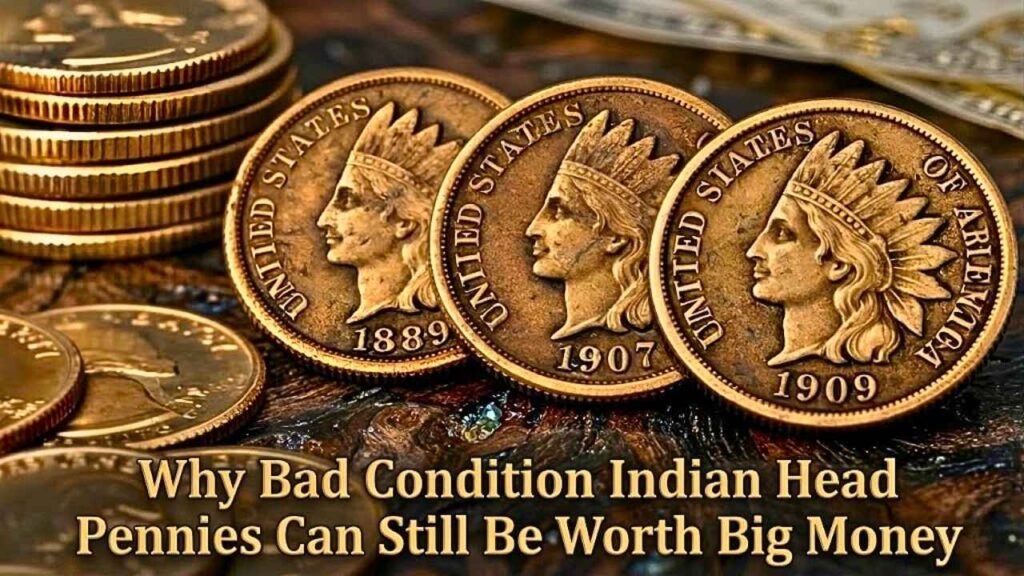
Coin collecting is often associated with pristine, shiny specimens that look as if they were minted yesterday. However, the reality is far more fascinating. Even coins in poor condition can hold surprising value, especially when they carry historical significance. Indian Head Pennies, minted between 1859 and 1909, are a perfect example of this phenomenon. While collectors naturally prefer high‑grade coins, even worn and damaged Indian Head Pennies can be worth more than you might expect. Their story is one of history, rarity, and enduring demand.
The History of Indian Head Pennies
The Indian Head Penny was designed by James Barton Longacre, the Chief Engraver of the U.S. Mint. Introduced in 1859, the coin featured Lady Liberty wearing a Native American headdress, symbolizing unity and strength. Over the next fifty years, these pennies became a staple of American currency, circulating widely during the Civil War, the Industrial Revolution, and the early 20th century. Today, they are cherished not only for their design but also for the historical context they represent.
Why Condition Isn’t Everything
In coin collecting, condition is important, but it is not the only factor that determines value. Rarity, demand, and historical significance often outweigh physical wear. Indian Head Pennies are a prime example. Even in poor condition, certain dates and mint marks can command significant prices. Collectors are often willing to pay for coins that fill gaps in their collections, regardless of grade. This makes worn Indian Head Pennies a hidden treasure for those who know what to look for.
Key Dates That Matter
Some Indian Head Pennies are far more valuable than others, even in bad condition. For example, the 1877 Indian Head Penny is one of the rarest issues, with a low mintage of just over 800,000. Even heavily worn examples can fetch hundreds of dollars. Similarly, the 1909‑S Indian Head Penny, minted in San Francisco, is highly sought after due to its limited production. Other key dates, such as 1864 with the “L” on the ribbon, also hold significant value. These coins prove that rarity can trump condition when it comes to collector demand.
Market Demand and Collector Appeal
The enduring popularity of Indian Head Pennies ensures that even worn coins remain in demand. Collectors appreciate them for their historical charm, and beginners often seek affordable examples to start their collections. Dealers recognize this demand and continue to buy and sell lower‑grade coins. Online marketplaces and coin shows frequently feature Indian Head Pennies in various conditions, with prices reflecting both rarity and collector interest.
The Role of Historical Significance
Beyond rarity, the historical context of Indian Head Pennies adds to their appeal. These coins circulated during pivotal moments in American history, from the Civil War to the dawn of the automobile age. Owning an Indian Head Penny, even in poor condition, is like holding a piece of that history in your hand. Collectors value this connection, and it contributes to the coin’s enduring worth.
Tips for Collectors
For those interested in Indian Head Pennies, it is important to understand that condition should not discourage you from acquiring a coin. Focus on key dates and mint marks, as these often hold value regardless of wear. Learn to recognize authentic pieces and avoid counterfeits, which can sometimes appear in the market. Building a collection of Indian Head Pennies, even in lower grades, can be both rewarding and financially worthwhile.
Key Highlights
- Indian Head Pennies were minted from 1859 to 1909.
- Designed by James Barton Longacre, featuring Liberty in a Native American headdress.
- Condition is important but rarity and demand often outweigh wear.
- Key dates like 1877 and 1909‑S are valuable even in poor condition.
- Historical significance adds to collector appeal and market demand.
Final Words
The world of coin collecting is full of surprises, and Indian Head Pennies are a perfect example of hidden treasure. While pristine coins may command the highest prices, even worn and damaged examples can hold significant value. Their rarity, historical importance, and enduring demand ensure that they remain a cornerstone of American numismatics. For collectors, the lesson is clear: never underestimate the worth of a coin simply because it shows its age. Sometimes, the most worn pieces carry the richest stories.