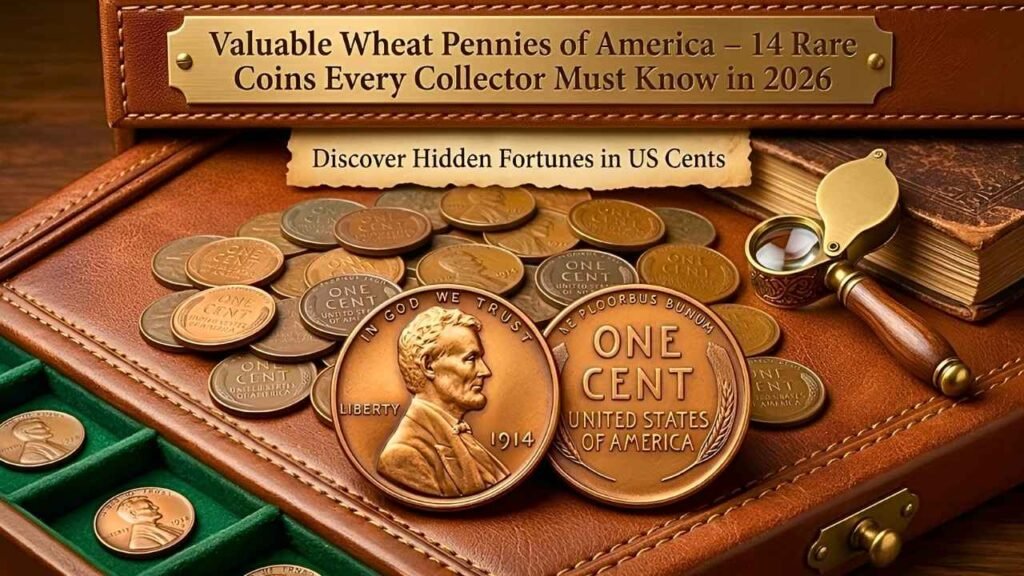
Wheat Pennies, minted between 1909 and 1958, remain one of the most beloved series in American coin collecting. Their simple design featuring Abraham Lincoln on the obverse and wheat stalks on the reverse has made them iconic. While most Wheat Pennies are common, certain rare dates and mint errors have become incredibly valuable, sometimes worth millions. In 2026, collectors continue to chase these elusive coins, not only for their monetary value but also for their historical significance.
1909‑S VDB Wheat Penny
The 1909‑S VDB is the most famous Wheat Penny. Struck in San Francisco with designer Victor David Brenner’s initials, it was quickly withdrawn, making it extremely rare. High‑grade examples can sell for tens of thousands of dollars.
1914‑D Wheat Penny
The 1914‑D is another key rarity. With a low mintage from the Denver Mint, it is highly sought after by collectors. In pristine condition, it can reach values well into six figures.
1922 No D Wheat Penny
The 1922 No D variety is a fascinating error. Due to worn dies, some coins were struck without the Denver Mint mark. This mistake created one of the most valuable Wheat Pennies, with top examples selling for thousands.
1931‑S Wheat Penny
The 1931‑S had a very low mintage during the Great Depression. Though not as rare as the 1909‑S VDB, it remains a key date for collectors and commands strong prices in higher grades.
1943 Copper Wheat Penny
One of the most legendary coins in U.S. history, the 1943 Copper Wheat Penny was struck in error when copper planchets were accidentally used instead of steel. Only a handful exist, and they have sold for millions at auction.
1944 Steel Wheat Penny
Similar to the 1943 copper error, the 1944 Steel Wheat Penny was produced when leftover steel planchets were mistakenly struck. This rare coin is highly prized and can fetch enormous sums.
1926‑S Wheat Penny
The 1926‑S is one of the toughest coins to find in high grade. Its poor strike quality and limited mintage make it a challenge for collectors, adding to its value.
1911‑S Wheat Penny
The 1911‑S is another low‑mintage coin from San Francisco. While not as famous as the 1909‑S VDB, it remains a key rarity in the series.
1915‑S Wheat Penny
The 1915‑S is scarce in higher grades, making it a desirable coin for advanced collectors. Its value continues to rise as demand grows.
1924‑D Wheat Penny
The 1924‑D is a semi‑key date with limited availability in top condition. Collectors often pay premium prices for well‑preserved examples.
1939‑D Wheat Penny
Though not as rare as earlier dates, the 1939‑D is still considered a semi‑key coin. Its scarcity in mint state adds to its appeal.
1955 Double Die Wheat Penny
The 1955 Double Die is one of the most famous error coins in American history. The doubled lettering on the obverse is easily visible, making it a collector favorite. High‑grade examples are worth thousands.
1949‑S Wheat Penny
The 1949‑S is a semi‑key coin that remains popular among collectors. While not as rare as others, it holds strong value in higher grades.
1936 Double Die Wheat Penny
The 1936 Double Die is another error variety that excites collectors. Its doubled features make it unique, and well‑preserved examples can command significant prices.
Key Highlights
- 1909‑S VDB remains the most famous Wheat Penny
- 1943 Copper and 1944 Steel errors worth millions
- 1914‑D and 1922 No D are highly sought rarities
- Double die varieties like 1955 and 1936 add excitement
- Low‑mintage coins from San Francisco continue to rise in value
Final Words
The Wheat Penny series is a cornerstone of American coin collecting. While most are common, the rare dates and error varieties have achieved legendary status, often selling for fortunes. In 2026, these coins remain symbols of history, artistry, and scarcity. For collectors and investors alike, owning one of these rare Wheat Pennies is not just about wealth but about preserving a piece of America’s numismatic heritage.