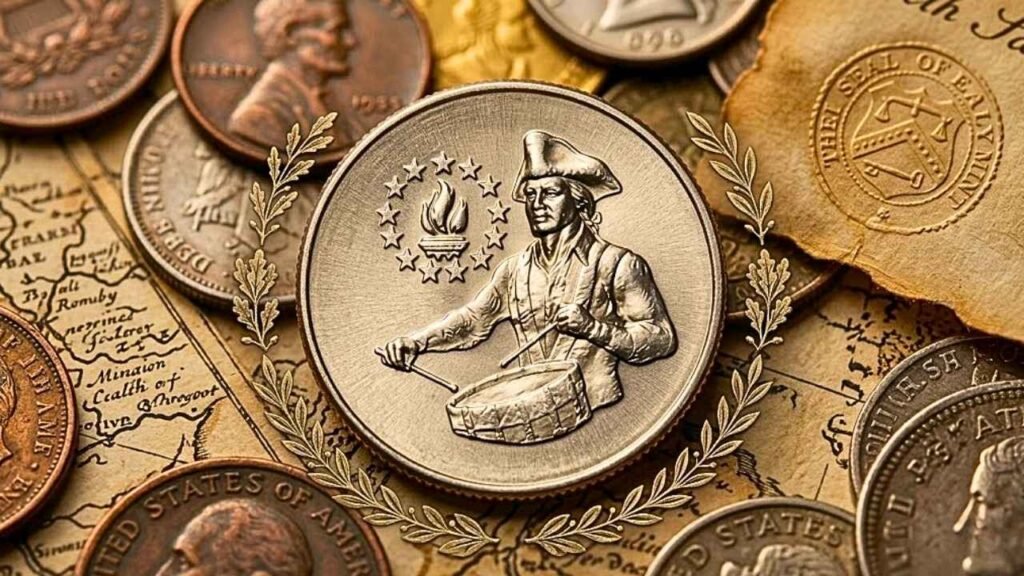
The Bicentennial Quarter, minted in 1976 to celebrate America’s 200th anniversary, remains one of the most iconic coins in U.S. history. Featuring the dual date 1776‑1976 and a special reverse design with a colonial drummer, these quarters were produced in massive numbers. Yet, among the millions struck, certain error varieties stand out as rare and valuable. One such example is the 1776‑1976 D Bicentennial Quarter with a filled mint mark error from Denver. This guide explores its history, design, rarity, and collector value.
The Bicentennial Celebration
In 1976, the United States celebrated its Bicentennial, marking 200 years since independence. To commemorate the occasion, the Mint released special designs for the quarter, half dollar, and dollar. The Bicentennial Quarter replaced the traditional eagle reverse with Jack L. Ahr’s colonial drummer design, accompanied by a torch of victory and thirteen stars. These coins were struck in both circulation and collector versions, making them a lasting symbol of patriotism.
The Denver Mint and Production
The Denver Mint played a major role in producing Bicentennial Quarters. Millions were struck with the “D” mint mark, ensuring wide circulation across the country. While most coins were ordinary, some developed minting errors that have since become collectible. Among these, the filled mint mark error is particularly intriguing, as it alters the appearance of the “D” and makes the coin stand out from standard issues.
Understanding the Filled Mint Mark Error
A filled mint mark occurs when debris, grease, or other material clogs the die during striking. As a result, the mint mark appears faint, distorted, or completely filled in. On the 1776‑1976 D Bicentennial Quarter, this error makes the “D” look unusual compared to normal strikes. While not extremely rare, filled mint mark errors are sought after by collectors who value unique variations in coinage.
Collectibility and Appeal
Collectors are drawn to error coins because they represent anomalies in the minting process. The Bicentennial Quarter already holds nostalgic and historical appeal, and an error variety adds another layer of interest. The filled mint mark error is relatively easy to spot, making it accessible for beginner collectors while still appealing to advanced enthusiasts. Its connection to the Bicentennial celebration enhances its desirability.
Condition and Value
As with all coins, condition plays a crucial role in determining value. Circulated examples of the filled mint mark Bicentennial Quarter may only be worth a few dollars, while uncirculated or high‑grade specimens can command higher prices. Proof and special collector strikes with errors are even more valuable. While not as rare as major double‑die errors, the filled mint mark variety remains a collectible piece that can fetch premiums above face value.

Market Demand
The market for Bicentennial Quarters remains strong due to their historical significance. Error varieties, including filled mint marks, attract steady demand from collectors. Online auctions, coin shows, and dealer inventories often feature these coins, with prices reflecting condition and rarity. For many collectors, owning a Bicentennial Quarter error is a way to connect with both history and the excitement of numismatic discovery.
Tips for Collectors
For those interested in collecting Bicentennial Quarters, pay close attention to mint marks and strike quality. Look for filled mint marks, double strikes, and other anomalies. Purchasing from reputable dealers ensures authenticity. Building a collection that includes both standard and error varieties offers a fuller picture of the Bicentennial coinage and its place in U.S. history.
Key Highlights
- Bicentennial Quarters were minted in 1976 to celebrate America’s 200th anniversary
- The Denver Mint produced millions with the “D” mint mark
- Filled mint mark errors occur when debris clogs the die during striking
- Collectors prize these coins for their uniqueness and historical appeal
- Value depends on condition, with uncirculated examples commanding higher prices
- Error varieties add extra interest to Bicentennial coin collections
Final Words
The 1776‑1976 D Bicentennial Quarter with a filled mint mark error is more than just a coin; it is a piece of history shaped by both celebration and imperfection. While millions of Bicentennial Quarters were struck, error varieties like this one remind us of the unpredictability of minting. For collectors, it represents a blend of patriotic symbolism and numismatic intrigue. Whether kept as a nostalgic keepsake or pursued as a rare collectible, the filled mint mark Bicentennial Quarter continues to capture the imagination of coin enthusiasts across generations.